GOT A UKULELE - Ukulele reviews and beginners tips
Showing posts with label strings. Show all posts

14 Feb 2020

Brüko Walnut Soprano Ukulele With A String Change

Not that long ago I reviewed the Brüko Walnut Soprano Ukulele. I adore it, but one of my minor gripes were the strings they are sold with. I promised I would change them and I have...

Brüko Walnut Soprano Ukulele Strings

Read More »

1 Mar 2019

Ernie Ball Ukulele Strings

One of those things that always causes a lot of buzz in the ukulele world is when a new ukulele string offering hits the shelves. And I must admit that I was rather interested to learn about this brand new line from Ernie Ball.

Ernie Ball Ukulele Strings

Read More »

25 Nov 2017

Aquila Sugar Ukulele Strings - TEST

Ahh ukulele strings. The bane of uke and musical instrument discussion forums worldwide. Still, we all have our favourites and love checking out new releases. I've therefore been lucky to be sent an advance sample of a brand new line of ukulele strings developed by Aquila. Say hello to the new Aquila 'Sugar' strings.

Aquila Sugar Ukulele Strings

Read More »

1 Mar 2017

Aquila - AGxAQ Tenor Ukulele Strings - Aldrine Guerrero Signature

Rather excited to receive a pack of these recently, hot of the press (or hot off the string machine). Ukulele strings that are a collaboration between Aldrine Guerrero and Aquila. Their AGxAQ tenor strings.

Aquila AGxAQ ukulele strings

Read More »

5 Jan 2017

My Ukulele Doesn't Hold Its Tuning - What Can I Do?

Probably one of the most common ukulele beginner gripes this one, and a subject I continue to see so much terrible advice about online. A Ukulele that doesn't hold tuning.

Actually, I am going to start this ukulele beginners post from another angle as this was the one that prompted me to go over this subject again.. An that is the completely unhelpful advice I regularly see given out to people who are asking for ukulele recommendations. That advice goes along the lines of...

"I recommend [Brand X] ukulele because this one holds tuning really well..." 

ukulele strings

Read More »

23 Sept 2016

Why The Fear Of Changing Ukulele Strings?

Not done a rant on Got A Ukulele for a while,

but a few discussions regarding changing ukulele strings on various social media channels lately brought me back to thinking about the real fear some people have in changing uke strings.

Changing Ukulele Strings


This isn't intended to re-hash the arguments over 'when should I change my strings' or 'what's the best brand' as I covered that subject before here. No this one goes back to something far more fundamental - and that's the increase in the number of people who really panic or avoid changing their strings altogether.

By way of some examples, these range from the 'oh I still have the same strings on that were on the uke when I bought it two years ago as I don't fancy changing them' to the 'I broke a string, but I had to take it to my club / friend to get them to change the strings for me'. Most bizarrely of all is an increase in the number of people reporting that they actually choose to PAY someone to change their strings for them. In one discussion I saw a guy explaining that he was paying around $30 for a string change because it gave him 'peace of mind'. Seriously? Sorry, to me that just seems completely crazy, particularly when you consider how easy it actually is.

You see, when you choose to play a ukulele (or any stringed instrument for that matter), you really need to understand that you WILL need to change strings at some point. At some point they will either just become impossible to tune properly, or at some point a string will snap. Fact of life, they don't last forever.

More importantly, strings are MEANT to be changed on a ukulele. They are consumables. They are meant to come off and go back on. And surely as part of your decision to start learning the ukulele, alongside other practice regimes you put yourself through, surely surely the practice of changing the strings on your instrument should really form part of that learning? Think of it as like the importance of knowing how to change a wheel if you buy a car, changing the  fuse in a plug if you are a homeowner, changing the ink cartridge in a printer, or even changing a light bulb. Granted, those three things have different difficulty levels, but here's the thing - changing a ukulele string really is right there with changing a fuse or a lightbulb.

And there is something else to string changing that I think is important and isn't often talked about. The process of doing it will work wonders for your connection with the instrument and how it works. You are getting right into the heart of what makes the ukulele play and getting hands on with your instrument. Add to that, the process of tuning up from scratch and it really is a good bonding exercise with your uke. Seriously.

I am interested in where this 'fear' comes from that pushes people to foist their ukulele on someone else to do the job for them. At the end of the day, changing a string only requires one knot and a bit of winding at the other end. You are not going to damage the ukulele, and nothing is going to happen that cannot be simply reversed. In fact if you get it wrong (and first time, you probably WILL) the worst that can really happen is that you snap the new string and have to get another, or at the least it will ping out of the bridge or peg and scare you half to death. (That still makes me jump..) Not really a big deal though is it?

So what are the biggest challenges that people worry about? Well the first is the bridge end of things. 'Oh, I can't understand those knots...' Really? With a slotted bridge it is simply a case of tying a granny knot (or perhaps two) that are big enough to not let the knot slip through the gap. With a tie bar bridge, granted the knot looks a little more complicated, but it really isn't. In fact it's just a granny knot too with a couple of extra winds. In fact in the world of knots, the bridge knots on a ukulele are significantly easier than tying a bow in a shoelace.

The second challenge is the 'but they keep slipping off the tuning peg' point. This does happen, but the simplest way to stop that happening is to actually tie the string to the post.  That is to say, pull the string all the way through, then feed it back through the hole and pull it tight - then start winding the strings. There is no way that is going to slip, but it can look a bit messy. With practice though you will learn how to get the wrapping right so that the coils themselves lock the string firmly.

I suppose the other fear is the 'but they just keep going out of tune' point. Yes, yes they do. Nothing I can say will change that, it's perfectly normal and you haven't done anything wrong. It just happens. Leave the ukulele tuned up a step or play it hard and keep re-tuning. They will hold eventually. This issue affects EVERY single person who has changed a string, so it's nothing to panic about.

Ukulele strings


Don't ge me wrong, string changing is a chore that nobody really enjoys, but that isn't because it's difficult. It's because it's boring and takes a bit of time! But I would still encourage any new player of the ukulele to start practicing this early. Get a new set tomorrow and put them on. If you go wrong, take them off and try again. And again and again. Get it right? Take them off and do it again, and again anyway. Trust me, you will soon see it as a shoelace and wonder why you were avoiding the process.

You may have already seen that I did a couple of videos regarding string change knots at the bridge (both tie bar and slotted types) which may help you below. But the best way is just to get on with it! I do wonder sometimes though whether ukulele ownership should come with a Compulsory Basic Training course!


Read More »

10 Jan 2016

On Ukulele String Changing Opinions

Ah, the ukulele world. Never really changes when it comes to the opinionated  armchair experts who love to use their keyboards to dictate what other players should and should not do... Don't use a strap, don't use a pick, don't play this, don't play that...  One of the most common I see is the strong opinions  on how often you should change your ukulele strings. Why all the fuss?


Interestingly, the most opinionated views tend to be those that like to force a view that ukulele strings last FOR EVER. Sure you also get those who tell you that your really should be changing them every week but the most animated and forceful arguments tend to come from people with an aversion to the concept of 'new strings'. Well at risk of letting the cat out of the bag in this rant too early... the frequency you change your string is entirely dependent on how much you play the instrument and when YOU feel like you want to change them. And that's it.

But lets just focus back on those that like to jump in to any debate on this subject and state that they have 'happily kept strings on for years and they are absolutely right... '.  It is usually stated in a 'I'm right and everyone else is wrong' kind of way, and usually (I suspect) because they are either too lazy to change strings or they don't really know what they are listening out for to make them consider changing them. That, or perhaps they just like being different and / or controversial..

Back in the days that ukulele strings were strung with natural materials (Cat gut - incidentally - nothing to do with the inner workings of actual cats - but actually innards of sheep or goats), there were reports of people who kept those strings going for years (literally). I have never played gut strings so I can't really comment but perhaps it is true. That's cool if it is I guess, but also kind of irrelevant to 99.9% of todays ukulele players who will never use gut strings.  What is also true is that most strings today are made of nylon or fluorocarbon material and that is a synthetic product. It's also a fact that such materials when held in tension for a period of time start to harden and go brittle as a natural consequence of the material they are made from.  That can lead to snapping but also a loss of one of the very functions you want for a string - a vibrating resonance. So in my view, the 'strings last forever' argument is an extremely unlikely one to hold true with most of todays modern strings. Sure enough, someone will pop up and tell me they have had strings on an instrument for 10 years. Great.... Good for you..... But for the vast majority of people that really isn't going to happen is it? And please don't tell me that strings get better with age as I saw in one discussion. That is just pseudo science that you can in no way prove to be true (quite simply because there is no way to fairly compare strings of ten years ago with strings today - your technique and the resonance of the instrument will also have changed in that time making the comparison unfair at best and mainly pointless).

So stepping back from the extreme viewpoint on changing frequency, what about the people who suggest string changes every couple of years only. Absolutely fine with me. If your strings have lasted that long and still sound ok to your ears, then why not? I think the reality for most people is they will likely snap one before that time period elapses or they will just get bored and want to try another brand, but if you are happy with them, that is really all that matters. I suppose what I say to that is, 'how are you judging that you are happy with them'?

At the other end of the scale we have the people who obsess about perfect tone, accuracy and freshness and suggest changing ukulele strings on an almost weekly basis. Again, if you have the time, money and patience to be restringing your uke every week (and dealing with the stretching and settling down that involves) then be my guest. Its not for me to tell you not to do that and equally not for anyone else to tell you that you are wrong either.

Yet rather like the strong views on string brands themselves, some people really like to tell other players, usually beginners, that what works for THEM is the only answer for YOU. All other viewpoints are null and void because they know best.. The reality is we are all different, we all play different instruments, we play different styles with  different attack angles and a different strength of strumming. We may have different picking techniques, different hardness of fingernails or use different picking implements. We keep instruments in different environments, we play them in different environments, we store them in different environments. Some of us dutifully clean down ukulele strings and necks after even five minutes play, and some put their ukuleles away still soaked in beer and blood from the show the night before. There are just too many variables for there to be a one size fits all answer to this issue.

Personally my re-stringing regime has changed. Last year I stopped performing regularly with a band, so my instruments now not only get less play, but they get less HARSH play. When gigging, I tended to play a lot of hard, thrashing, rock stuff on the ukulele. Couple that with gigs lasting for two hours, often in sweaty clubs and often with the inclusion of the occasional spilled beer or blood from a broken nail and my ukuleles would often finish the night pretty grimy. In those days I would change strings every couple of months or so (or more frequently). But that was because they were taking a massive hammering. These days I don't really have a set pattern and change them when I feel like it. But how do I know I want a change?

The usual tips I give people apply here:

1. Are you noticing any change in tuning accuracy (intonation) down the neck?
2. Are the strings starting to buzz when they didn't before?
3. If you run a finger under the strings can you feel notches where the frets have started to wear the strings down.
4. Have you snapped a string, and replaced it with a single (meaning you now have a mix of new and old strings)

If the answer to any of the above is 'yes' then you may want to change the strings. It's not a hard and fast rule, but a guide that works for me. And note.... the time period these things can start to indicate a change is needed will vary based on YOU.  There may be other reasons for a change of course - you may just 'fancy it' - and there is nothing wrong with that either!

Strings are really not that expensive, and rather like tyres for a car they are of course MEANT to be changed, not kept for as long as possible in some sort of perverse stamina contest. Whether that means you want to change them weekly, monthly or yearly, that is entirely up to you but don't be afraid of changing them. And please, please don't be afraid of changing them, even though you are having tuning issues just because a chap in your club told you that 'strings last for years'.... A change can actually breathe new life into an instrument that you were finding uninspiring.  Hey a string change can also just give you a change in voice even if they didn't need changing.. And guess what - if the old strings were not actually that old, you can save them and use them again!

And if you want to try to max your strings out and keep them on for 10 years, then be my guest. Just stop telling the rest of us that you know something magical that we don't and that we are all wrong.

For me - I'm off to change my strings... or maybe I'll do it tomorrow / next week / next month / next year....

------------------

Like this post? Read my range of Ukulele Beginners Tips and rants here!


Read More »

16 May 2015

Changing Tastes and The Time Sensitivity Problem With A Ukulele Blog.

OK, bit of an odd one this, but something I felt the need to respond to. My post yesterday about fishing lines had a rather incredible amount of traffic. Not saying everyone would be in agreement, but an incredible amount of traffic all the same. The whole string debate still seems to be every ukulele players favourite subject! But someone pulled me up on it with a valid observation - that in the past I had claimed that certain strings were my favourites and that I COULD tell strong differences between them. Yet here I am now saying the opposite. What gives?


Read More »

15 May 2015

Something Fishy? Fishing Line as Ukulele Strings

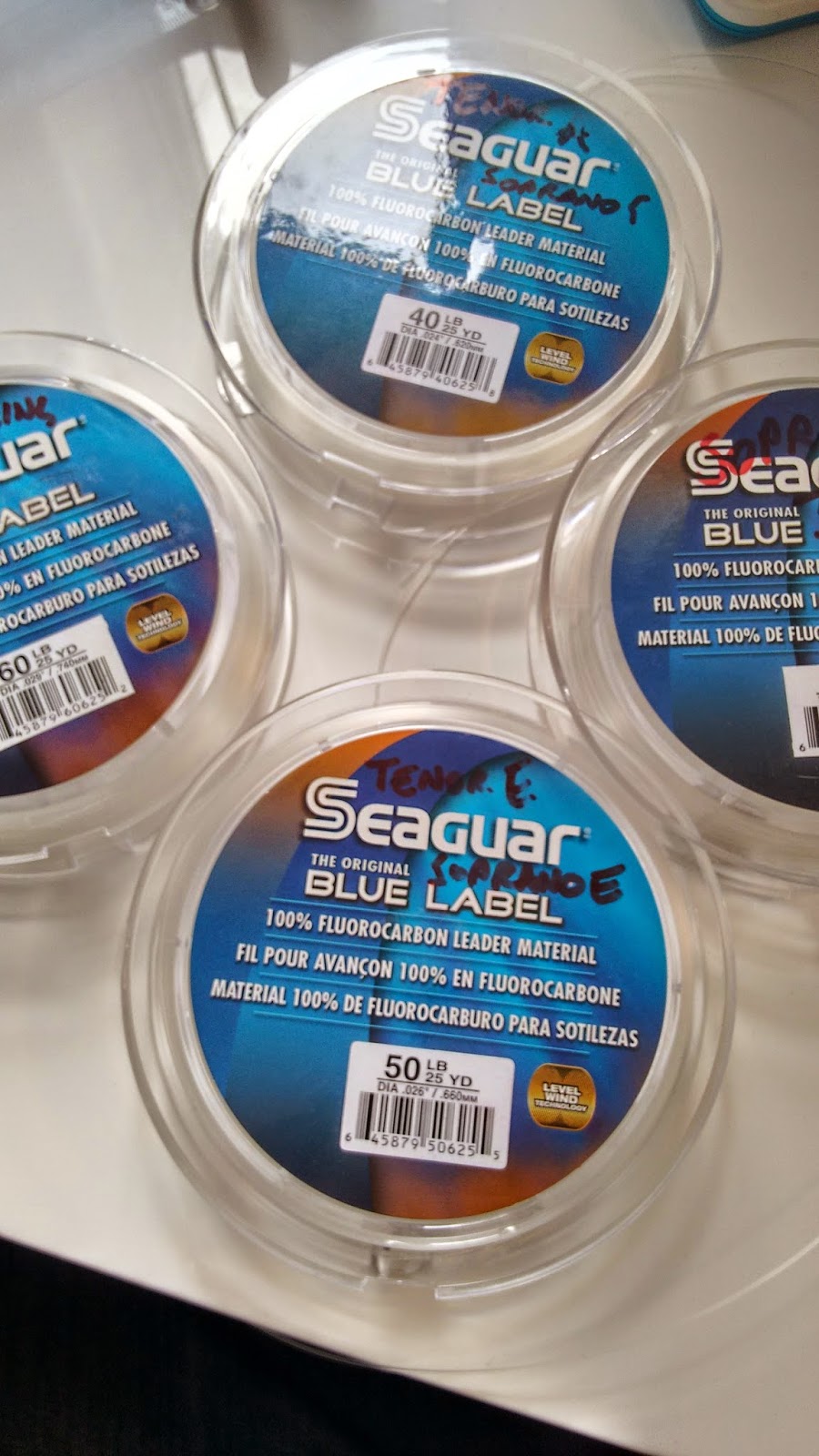
OK, couldn't hold out much more on this subject, and I am seeing it cropping up more and more online these days. Something fishy has been happening at Got A Ukulele Towers... All (yes all) of my ukuleles are now strung with fishing line. You know, the stuff for... erm... fishing... On a musical instrument...


That is not actually as absurd as it sounds... read on.

You see, the thing is, most modern fishing line is made of stuff called Fluorocarbon. Heard that word before? Yes, exactly the same stuff as many ukulele strings. So I started to do a bit of research and realised that, despite what people may believe, there are not many ukulele string factories around the world making this stuff. They are, in the main,  buying their product from the makers of fishing lines. Why? Well, when fishing line makers are churning out this stuff in vast lengths, so they can justify whole factories to make it. Whilst the ukulele is popular, there just isn't enough string on every uke on the planet to match the amount that is dunked in the ocean by sea fishermen. In short - it makes sense to buy from the established factories who are already making the stuff and have the production facilities in place.


So before I get into the details of my experience, some caveats which are really important.


Read More »

11 Feb 2015

Snake Oil in the Ukulele World

Coming to the uke some years ago from a guitar background, there is something I have noticed of late as this current boom in ukulele buying shows no signs of slowing. Where an instrument has a big buyers market, so the mythical ideas and gadgetry start to follow. Is Snake Oil on the rise in the uke world?


So aside from the myths that continue to perpetuate the uke world ( and I have exposed a few before on this blog - see here ) it seems that the wonder treatments are also on the rise.

At the simplest level, strings seem to have been a hot topic on social media (and this site) of late, but I am really starting to lose patience with the endless debates as to 'which string is best'. In the simplest terms strings come in three types of material, either nylon, synthetic gut  (or nylgut) solely made by the Aquila company or Fluorocarbon. Whilst traditionalists may occasionally still state they like nylon, by far the most strings are sold in the latter two categories. But let us look at fluorocarbon as a material. It is an increasingly well known fact that there are not factories set up around the world to make fluorocarbon ukulele strings - it just would not be cost effective. As such the suggestion is that they are actually sourced from fishing line makers, mainly in Japan, who make miles of the stuff already. It figures, and I believe that Worth have admitted that they source their string materials from Seaguar fishing line makers. Waverly Street ukes ship theirs with the same fishing lines.  (Note - i am not saying any old cheap fishing line will work here, we are talking about high quality fluorocarbon)


Read More »

8 Feb 2015

New Aquila 'Lava' Ukulele Strings Test

For some time now I felt a bit guilty about my views on Aquila. You see, I really have never got on well with their standard Nylgut strings on this musical instrument. I just never liked the tone or feel, but still, recognised what a great company they are. I was therefore very interested to see their new launch of a brand new product, only very recently available in uke stores. Their 'Lava' brand of new Nylguts.


Aquila Lava Ukulele Strings

Before we take a look, some housekeeping that will be old news to regular readers of my stuff. I don't recommend particular strings to others for one simple reason - they are a totally personal choice. The only person who's opinion on strings matters is the player who is playing them. It's simple really - we all have different ukes (mostly) but more importantly we have different playing styles, ears and musical tastes. What I like may not be what you like, and what you like may not suit me. BUT THAT IS COOL. As such, this is not a 'review' as such, but just an opportunity to tell you about this new string formula. What I say about older Aquilas or indeed these new ones should not be taken as the gospel!


Read More »

1 Mar 2014

How To Change Ukulele Strings - Beginners Guide

Surprised I have never posted a video like this before, but a number of people had suggested that a video would be helpful. How to change ukulele strings! One for absolute beginners.

I would recommend all beginners learn how to change their strings at an early stage.


( DIRECT LINK )

Read More »

17 Oct 2013

La Bella Uke-Pro Series ukulele strings - REVIEW

I have kind of got a bit of a name for myself when it comes to opinions on ukulele strings. I'm no fan of people telling others that 'brand X' is the best there is. Strings are totally personal and people should experiment and find what they like themselves. That said, reviews and other peoples opinions can be helpful, so take a look at these from La Bella.


A month or two ago, my band was contacted by Bob Archigan of La Bella strings asking us to take a look at their new 'Uke-Pro' series for ukulele. A bundle of sets duly arrived and we have been playing them for a little while now.

la bella uke-pro ukulele strings


The Uke-Pro strings we are testing are the No.100 grade, and form part of a range of La Bella products for uke. The 100 grade are made for concert and tenor ukes, and also in the Uke Pro series is the No.200 pack which is made for soprano. La Bella have a very respected name in strings for classical guitar so we were keen to take a look.

On opening the pack, the colour is the first thing that stands out. In the uke string world, the vast majority of strings are black or clear / white.  In the clear / white camp, the usual way to identify a white string is 'it's probably by Aquila'. These La Bella strings though fall in between clear and white. They are slightly translucent, but not anywhere near is solid white as Aquilas, yet certainly not totally clear like Worths (am I making any sense?). I fitted my set to a Pono Tenor ukulele, and also went with the extra wound low G string (and that is unusual for me but read on). The low G is an extra purchase and comes as a single string.

So off went the old and on with the La Bellas. Initial observations were that they settled down far quicker than most other strings I have used (and in fact stayed that way). Quite remarkable. I'm not saying they didn't need some re-tuning, but the process was certainly quicker.

The feel of the strings also falls in that halfway house between Aquilas and other flourocarbons in that they have a kind of semi rough quality. Not glossy and slippy at all. Actually that rough feel is one of the things I don't like about Aquila strings, but these are not to bad on the fingers at all. Incidentally, the packaging doesn't say whether these are nylon or fluorocarbon so that remains a bit of a mystery to me.

la bella uke-pro ukulele strings at the bridge
Note the semi transparent colour and wound low G


And what about that low G string? Well I do regularly play low G on my tenor ukes, but only ever play unwound low G strings. The reason for that is I tend to find wound strings are louder or take over the mix from the other strings, and that irritates me. It was therefore with some trepidation that I put this one on, but I had no choice as La Bella don't make an unwound version. From taking them out of the pack I noticed this one was a little different. The winding is almost completely invisible as it is very fine and tight. As such it looks like it's made of solid metal. And that quality extends to how they feel. Many wound strings can make a sound as you run your fingers up them, but these feel just like the un wound strings to me so that is a big plus for me.

And how do they play? Well I find them very comfortable and that low G string is perfectly balanced in the mix. Throughout this review I have been making the point that (looks and feel wise) they seem between Aquila and Worth. When I spoke to another of the band, that is exactly what he said about the sound and I think that he is right. For me, Aquila strings can boom and overpower a solid wood instrument. They sure have volume, but I think they can kill tone. Worth flourocarbons on the other hand can sound very sweet but can (on some instruments) lack a little punch I found. And these La Bellas seem to deliver a bit of both - they have the attack and volume of an Aquila string, but a sweetness in tone, particularly when they are finger picked.

la bella uke-pro ukulele strings at the nut of Pono uke


I actually think these sound far better picked than strummed (though I would say that about Aquila too) but they do have qualities of all sorts of strings I have tried.

The response from others in the band is also positive, so I think La Bella may be on to something here. Of course, with their heritage that shouldn't come as a surprise..

As I said in the introduction - I don't ram string opinions in peoples faces, as only YOU will determine what strings you prefer. I would however heartily recommend that you give these a try as you may like them.

Thanks to Bob for sending them over! You can read more about La Bella strings here

http://www.labella.com/products/100-uke-pro/
Read More »

5 Aug 2013

Ukulele Myths

Been toying with writing this ukulele post for a while now, and was unsure as I suspect it may raise some eyebrows or elicit a negative comment or two.


The thing is though, the boom in popularity of the ukulele over the last few years has coincided with the boom in social media. As such, LOTS of people are talking about ukuleles online and it can be hard sometimes to cut through the noise. Within those discussions are a lot of very knowledgeable and helpful people, but equally I repeatedly see bad advice being given out to beginners, and that is a worry. I therefore thought I would share some of my views, (and they are just that, views). Feel free to take exception to them, but do read carefully! Here are ten of the common misconceptions I see floating around.

ukulele myths


1. You should / shouldn't use a strap

I've blogged on this topic before and yet the debate online still rages on. Debate is good, opinions are good, but increasingly I am seeing people telling others that it is either definitely right or definitely wrong and that is just crazy. On a recent post I wrote about straps, I received an online message telling me I was an idiot and that 'I've got two hands, why do I need a strap'. One chap recently, and proudly stated online that 'you are not playing a ukulele properly if you use a strap'.... Seriously - this is quite common.

Honestly - if you want to use a strap, use a strap, if you don't, then don't. But please don't state its completely wrong. For me it's about giving me free hands when gigging, which is likely the same for professional players like James Hill, Brittni Paiva, Jake Shimabukuro etc who use straps. Yes, you read that right - some of the top players on the planet.....

I will drop in one exception - if you play banjolele in the Formby style, then I can see how a strap will totally go against the technique you are using. Fair play. But I am making this point regarding ukuleles in general.


2. After a soprano, a concert is an 'upgrade'

I am seeing this statement bandied about more and more. The suggestion is that the soprano is the beginner instrument, and once you have learned your chops you are allowed to move on to a 'better' ukulele which happens to be bigger. I've seen the same people recommending first time buyers should 'buy up a size from the start, as it you will only upgrade anyway'... I struggle with this logic. The soprano is not a beginner ukulele, it is THE traditional ukulele scale. If anything, the soprano is the daddy of the ukulele world. Some players I know prefer sopranos solely and have been playing for years. For me, my favourite sizes are sopranos and tenors. Both have their attractions for me. If you are a beginner and like a soprano, please don't feel that you MUST 'upgrade'..

Choose your instrument based on the tone you want, how comfortable you find it, and how it looks and speaks to you. No one size is 'the winner'.

Please do read my article about the soprano and host of myths associated with that here.


3. Larger scale ukuleles are easier for beginners to play

This statement is extremely common and is closely linked to point 2 above. Beginner X asks for help online saying he finds the fingerboard cramped on a soprano, and dozens say 'get a bigger uke'. A couple of points here. All fingerboards on ukes are pretty cramped. It's a ukulele! Second, whilst a bigger uke can help, it is not always going to be the case. The misconception that a concert is naturally easier because the fret spacing is wider is just plain wrong. The difference in scale is actually pretty small, and what is FAR more important to giving you comfort on the neck are a range of things, namely; The scale, the neck width and the neck profile. Other factors can also come in to play that are a little more subtle too, such as the size of the frets, string choice and action, but generally it's the first three.

What tends to happen here is people struggle with cheap sopranos and then buy concerts and tenors and think 'oh, this is easier'. But it's almost always easier because the nut has naturally become wider. And THAT is where you feel relief - across the neck. And here's the thing. You CAN get sopranos with necks just as wide as tenors! So it's not the scale increase that is giving you the space, it's the nut width!

I have owned soprano ukes that have wider nut widths than concerts, as much as most tenors and as such have more space on the fretboard.  The Bruko 6, the Flea and the Koaloha all fit this category and have far more space than narrow neck concerts. Most Kiwaya ukuleles do regardless of scale.  The only real answer is go to a store and try a few out. You may find that a concert is indeed easier for you if you are a beginner and that is great, but depending on the ukes you play, you equally may not. I also know accomplished players who find tenors difficult to hold and get their arms around, even with a strap. Please, please please - it is NOT the scale increase that is helping you!

Bruko 6 ukulele
The wide nut Bruko No.6 Soprano


4. The electro uke price conundrum...

Quite simply, a pickup in a ukulele costs money. They are not thrown in for free.  If you have £150 to spend on a ukulele, and get an electro acoustic for that price, you are NOT buying a £150 ukulele. The pickup has to have a price. Putting that in perspective, a half decent entry level piezo pickup, such as a Shadow under saddle, will cost you RRP about £50. Let's say that the cost price is half that (I am guessing), then if you want a £150 quality ukulele that has a pickup, perhaps you should extend your budget to £175?

The real issue here comes at the absolute entry level price point, where people pick up an electro for about £75. This means that either the ukulele or the pickup is woeful in quality (usually both). I've inspected the pickup strips on some of these ultra cheap electro ukes, and they really are poor quality, and often badly fitted. That means a muddy, electric sound, and often volume differences between the strings. Prime example. And back to prices, you can pick those Peanuts up for only a little more than the cost of a shadow piezo pickup. Corners are cut somewhere!

Plugging in a uke is a lot of fun, and essential for our band, but I am afraid it will cost you more, not the same amount. Choose wisely!


5. The Ukulele Orchestra Of Great Britain use music stands, so should we!

OK, I 'ummed and ahhed' about whether to post this one, as it's most likely to get me flamed. But the UOGB have an act (a very good one). They sit down, wear bow ties, tails and evening gowns, they read from music stands..... Because of the word 'orchestra' in their name. They are aiming to look like a full blown orchestra. Behind that though are some of the most talented performers you will meet. Do you think they really need sheets to tell them the next chord is a G7? They are props in the main.

So, why am I making that point? Well because I suspect that because of their act, ukulele clubs up and down the country use music stands in the same way. Now, time to dig myself somewhat out of the hole I appear to be digging... I am not against music stands at all. Our band use them for practice all the time. They are absolutely essential for large clubs to ensure everyone is on the same page, particularly for beginners. But if you go out as a club to perform a real 'gig', particularly one where you may be getting paid, I just think it looks all wrong if you are staring at them, and to some extent is taking liberties with your venue. Go out to your local live music venues and watch a few bands. How many stand stock still behind music stands? Very few. Would you be impressed if you went to see your favourite musical artist and he or she stood behind a music stand, head down, reading?

Please don't get me wrong, performing a show takes a lot of work, and that means a lot of words and progressions to learn. It takes time and effort. And heck, crib sheets on music stands are absolutely fine - but why not place them where they are not directly in front of your face? Engage with your audience. My band used them all the time, but kept them hidden or subtle and out of the way! Lot's of the worlds biggest professional acts do this. Some players stick reminders on the back of their instruments too! The point being, you are not hiding behind a music stand, and playing to your audience whilst looking down as opposed to looking at them! In live performance I just think they kill interaction and look unprofessional.

And I am not knocking clubs here - as I say, stands and sheets are essential for those with huge songbooks and many beginner players. But try to encourage people to step away from them as they progress and play from memory or use them as subtle prompts only learning to play glancing at them rather than with their noses buried in a folder of sheets.

Oh, and if you do play full on classical music, then of course, a music stand is entirely appropriate, as it would be if you were playing violin at the Royal Albert Hall.

And as I type this, next to me in my room, is a music stand....


6. Ukulele X is cheaper on Amazon, buy it there!

Ah, Amazon... Strange of me to knock them considering I sell my books through them, but to me, that is what they are at heart - a bookseller.

I see countless examples of people recommending beginners get their first uke from Amazon, usually because it means you save a dollar or two on the price compared to a music shop. With ultra cheap ukes though, whilst you can find a good one slip through, you really want them to be checked over by a musician or tech who can ensure that things like intonation and action are acceptable. Amazon will NOT do that. What you will get is a box straight from the factory in China that has probably not even been opened. I have seen people on line asking for help, having bought a £30 uke on Amazon which is unplayable. They then either spend another £25 on a tech giving it a setup, or they buy another uke. Suddenly their basic outlay has jumped up dramatically. Do yourself a favour if you are buying your first instrument, go and support your local music shop!

And yes, someone will point out I do have links to Amazon products on this very site. I am not saying you shouldn't buy from Amazon - anyone who is confident in adjusting action and changing strings themselves will likely be fine with them. This advice is really aimed at the first time buyer.


7. Koa is the holy grail..

This one may ruffle a few feathers too, but seriously, Koa wood, as pretty as it is to look at, is not some sort of holy grail in ukulele construction beyond which nothing can be bettered. Koa does make (in my opinion) a very nice sounding ukulele. It's also the traditional wood used in Hawaii, so I appreciate it has some real heritage. But, that is only my opinion. Wood choice is totally personal, and it is in no way wrong to play a uke made of mahogany, cedar, spruce or whatever. Nor is it any way sub standard to a koa uke. It is just different. Vintage Martin sopranos tended to be made of mahogany, and some of those can fetch huge prices. Play a few ukes, and choose a wood type based on what your ear tells you, not based on what Facebook told you about Koa.


8. Volume is not everything

Take a cheap laminate ukulele, add Aquila brand strings and have a strum. Big noise! But if I strapped Aquila strings over a biscuit tin I would get a big noise.

I know many players who moved on from their first laminate uke to a solid wood instrument and then complained that it was too quiet. What you are gaining moving to more serious instruments is an increase in tone, sustain, harmonics and just ukulele loveliness that you just don't get on an entry level laminate uke. Your ears will adjust, and as you progress as a player you will learn to spot these nuances and never turn back.


9. These strings are THE BEST!

Another extremely common piece of 'advice' you will see online is the string recommendation. Of course it is always great to hear other peoples views on strings (and I have reviewed several brands on this very site), but always bear in mind the phrase, 'your mileage may vary'!

String choices are a very personal thing. How they perform on an instrument will depend on a variety of factors; the instrument itself (and even two identical models can perform differently), your own playing style, and perhaps most importantly, your own ears. Nobody else can tell you what a particular string brand will sound like to YOU. Only you can decide that. I use a variety of strings, and that is because on each uke I own, I have tested several brands. Eventually I will settle on the strings that suit that particular instrument when using my own ears. You might not agree with my choices and that is just fine. All that matters is that you like the strings you choose yourself.

And as a final point. No set of strings will make you a better player.


10. The Ukulele is easy to play!

Ah the big one! Perhaps the most commonly used statement trotted out, usually by local newspapers to start a piece on a local event, club or whatever. The ukulele is not 'easy'. No musical instrument is easy to play (well, perhaps the tambourine...). Learning any instrument takes time, dedication and practice.

What the ukulele does have though is a shallower learning curve in the early stages of learning than many other instruments. That means an absolute beginner can get going in a relatively short space of time and get a two or three chord song basically right. That is a huge plus point for the instrument, as it allows clubs to be inclusive and encourages new players to keep going.

But easy is not the right word. If you want to master the ukulele, you may need to spend a lifetime, like most things in life!


11. You MUST go for solid wood!

This is a wildly popular opinion trotted out online - the concept that if you want a decent ukulele that it MUST be made of solid wood, and that is somehow better. Wrong...

Solid wood instruments use solid pieces of tone wood in the body construction as opposed to laminate ukes which use thin sandwiches of wood to create the same thing. Generally speaking, solid wood is more expensive and that has led to the misconception that it therefore must be 'better'. It's actually more expensive because it takes more work to get it right without the ukulele splitting or collapsing, but 'better'? Not necessarily. Sure, at the higher end, you really want to be looking at solid wood, but at the lower and intermediate level price points you will see a lot more laminate. That doesn't mean they are 'worse' though, and in fact there are some stellar laminate made ukuleles out there from brands like Kiwaya. My summary is that I would take a well made laminate ukulele over a poorly made solid wood uke every day of the week. And that matters because in this drive to get the ukulele as cheap as possible a lot of brands are putting out impossibly low priced solid wood instruments because they know the market is telling buyer they are better. But in reality they are poorly finished, poorly seasoned, poorly built and often overly thick and heavy. This is a huge topic and you will find more on the subject here -  https://www.gotaukulele.com/2015/03/theres-good-and-bad-ukuleles-whether.html  I really would urge you to read this one if you have someone in your ear telling you that solid wood is better.

12. If you are left handed you MUST play this way!

Ah yes, the scourge of the right handed player telling the left handed beginner that they know what is best. No they don't. They are not left handed and they don't know whats best. Even if that advisor is left handed themself, they don't know what is best for another player - they only know what is best for THEM. The truth is there are lots of established ways that left handed players have approached playing stringed instruments like guitars and ukuleles - and they are ALL right depending on the person. The correct approach is to try a variety of methods and go with the one that works best for you. It's not wrong if it works for you and you should not put up with anyone else telling you what is best. Only you can know that. Take a look at the options for left handed ukulele players here.


So, there you go. If you are a beginner just starting out do be careful with what advice you take on board. Social media creates a lot of noise, but not all of it helpful. Be wise though and you will have many years of fun with this little instrument!


AND! Be sure to check out my other ukulele RANTS - where I explode the many myths and bad advice that surrounds the instrument - CLICK this link! http://www.gotaukulele.com/search/label/rants
Read More »

9 Apr 2013

Savarez Alliance Composite string test

Good ukulele string test video's on YouTube are few and far between, especially videos with good sound and production.


Was dead pleased therefore that Simon Taylor (@phooto on Twitter) sent me a link to this video he made showing a change from Aquila strings to Savarez Alliance Composites. Love the fast forward string change in the middle!


DIRECT LINK )

Thanks Simon!
Read More »

14 Oct 2012

The Aquila string harvest

Had to share this! For those of you wanting to know where Aquila ukulele strings come from!


- Posted using BlogPress from my iPad
Read More »

11 Jul 2012

Living Water Ukulele Strings - REVIEW

I think it's nice when a new development hits the ukulele shelves, and that is certainly something that can be said for a new brand of strings that have recently been made available - Living Water Strings - which are causing a buzz all over the ukulele forums.  I've been trying them out.


Living Water Ukulele Strings

Firstly though - a little bit of housekeeping. Whilst I do like to review and test strings, I always make the same point to my readers. Strings are a personal choice and just because I say I do or don't like a certain brand, does not mean you will have the same experience. Other factors come into play; the ukulele they are played on, the players style, the players own ears. As such, the old adage 'Your mileage may vary' has to apply.  All of that said, when it comes to these new strings though, I may be changing that opinion a little - read on!

Living Water Strings are a new brand, brought to market by Ken Middleton - and I find that quite exciting for a couple of reasons. Firstly, there are actually not that many strings around for ukulele. There are a few, but nowhere near as many varieties as available for the guitar. Sure there are some bespoke packs cropping up, but in the main the forums are full of people endlessly debating the pros and cons of Aquilas, Worths, Martins, D'Addarios and maybe a couple of others. In that sense it's great to see a new kid on the block.  The second reason I find this exciting is because this string set has been selected personally by a renowned player and exponent of the Uke - Ken himself!  Ken has chosen a supplier and product line, and tested them until he found the string qualities that he liked and suited his own playing.  He is putting these strings together into packs himself and is distributing them in England (although I like the touch on the packet that states they are "Made In Heaven"!)

The strings are available in the four main uke scales, Soprano, Concert, Tenor and Baritone, and, very recently, Ken has launched a Low G version for Tenor.  All the others are in high G Re-entrant tuning (the Baritone in high D). It's worth noting that the low G set is an all fluorocarbon set (no wound strings here) which is something I personally applaud.

I have put a set on my Soprano and Tenor ukes so cannot speak for the Baritone or Concert yet. In addition, my review really comes from playing them mainly on the tenor scale - that is where I have been putting my strumming hours the most recently.

The strings are elegantly packaged - a very simple but classy design which explains on the back:

"Manufactured from hi-tech fluorocarbon, these strings give a wonderfully vibrant, crystal-clear tone to your ukulele. They are made to exacting standards, with a complex polymer structure that is formulated to give both strength and flexibility, whilst maintaining resistance to abrasion. In other words, they don't break easily, they vibrate well and last a long time."

I actually really like the packaging. What?? I hear you cry - what does the packaging matter? Well, I think it does matter. For a start the individual strings come in re-sealable clear plastic wallets (and the wallets themselves in a 'master' clear wallet that contains the card branding and a business card with contact details). As someone who changes strings a lot (for fun!) this is great, as a 'not so old set' can go in the wallets and be re-sealed so they don't uncoil. In addition, being clear, I can see what I have put inside them. For me this is far better than flimsy paper bags.  Secondly, the wallets are labelled not only with the string number but with the note as well - far better than some of the other coding systems (or no coding systems at all) that you see on other strings.

Living Water Ukulele Strings Packaging


The strings are a completely clear fluorocarbon and when on my ukes to me feel similar in gauge to Worth Clears. They are supremely smooth on the fingers with no noise when sliding on notes. The tension is also right for my playing (no flopping strings, but not so tight as to feel like strumming iron bars!) On my tenor these settled down from stretching really quickly with only minor tweaks in the week ahead. When I installed the tenors, I found quite a lot of excess string at the post, though less so on the Soprano, and wonder whether Ken is experimenting in the optimum length. (Uke sizes vary and as such strings need to be a one size fits all)

But how do they sound?  Well, let me give you a little background on a journey I have been on with my  Kanile'a Tenor uke. This is a wonderful instrument with a loud, warm and earthy tone that I adore. Well, I 'say' I adore it - no matter what strings are on it, I adore it's voice when it is fingerpicked. Strummed however, I have been feeling it is falling short for me a little. That earthy voice is making some strumming a little muddy for me - not enough bite or clarity across the strings. I have tried virtually every string I can lay my hands on to try to get the sound I want, but to no avail so far.  On went the Living Water Strings and.....

Wow! Honestly, wow! It felt like I was playing a different ukulele! The sound was immediately brighter and I think a little louder, but it was the relationship between the strings in strumming that really pleased me. The strings sound like they are really working together and harmonies between notes really shimmer and sing. There is total clarity across unfretted strings, but played in chords and the sound is more than the sum of its parts (if you see what I mean). I spent the rest of the night strumming away with a smile on my face!

But how were they for picking? Had I gained something only to lose elsewhere? Well, they are just great. There wasn't such a massive leap from the Worth Clears that were previously on the Kanile'a (and any leap may have been, to my ear, because I was swapping from a played in string) but they are no worse. As such I am a very happy player - they hit exactly the spot I have been looking for and have made my Kanile'a the full shilling.  Most recently I gigged with the N'Ukes as part of the Chester charity event with my Kanile'a and the Living Water Strings - was really pleased with the sound and the feel.

And what about the other gauges? - well that sudden leap in bite and brightness on such an earthy instrument as the Kanile'a did worry me when it came to putting them on my Koaloha Soprano. Whilst I haven't played that as much, it would seem my fears were unfounded as they sound just great on that too though perhaps with a more subtle improvement in tone. That harmonic ring is improved though.

So let's just go back to that earlier paragraph in which I pointed out that string choice is personal. Well, yes I still believe that, but bear something in mind. All over the social media, ukulele players are talking highly about these strings. Friends in our uke group are playing them and posting me extremely positive feedback. In fact I've not yet seen any bad feedback! Could Mr Middleton have hit on something special here?  Let's put it this way - I bought more as I intend to keep using them.

Accordingly - these get my vote and a strong recommendation you give them a try asap!

The strings are available direct from Ken on his website  (on which you can see the individual string gauges) and I believe he is also selling them on eBay.


Read More »

26 Jun 2012

Ukulele Vid - Croonalonga Watchtower

Love this ukulele vid from Ian of the Re-entrants.

I am always a big fan of the uke being used to play a well known song in a style that you wouldn't normally expect, and this does that. The video also gets a notable mention as I have it on authority that this Ohana Baritone uke Ian is playing is strung with a set of uke strings new to the market, and brought to us by Ken Middleton. I'm currently testing his tenor set of Living Water strings and will be giving you my thoughts on GAU soon. As you can see, these Bari scale strings sound just great!


You can now get Living Water strings via Ken's site


- Posted using BlogPress from my iPad
Read More »

More than four ukulele strings?

Hang on you are saying - MORE than four strings on a ukulele? I'm only just learning to play the four I have! Well, as you go on a hunt for different sorts of instrument you may well come across ukes with more than the normal four strings. I thought I would give you some explanation on that.


You will commonly find ukuleles with either six or eight strings, and to further complicate matters, the six stringers come in two distinct types.

SIX STRINGERS


The first type of six stringer is where the extra two strings still play in "four courses". But what does that mean? Well the four strings on a normal four string uke are known as the four courses.  A six string uke with four courses means that there are an additional two strings that are tuned the same as two of the standard four (meaning that there are a total of four main notes on the instrument). This gives the ukulele a richer more harmonic sound because of the interplay between the strings. The most common strings that are paired are the first (A) and third (C) strings with the extra A tuned the same as the standard A, and the extra C either an octave above or below the normal C.  Some people do however experiment and there are a whole variety of tunings.

kala six string ukulele
Kala 6 string


The other variety of six string ukulele uses six strings over six courses (much like a guitar) and is commonly tuned like a guitar at the fifth fret, i.e. ADGCEA. These are usually called guitarleles and one of the first I saw was introduced by Yamaha.

yamaha guitarlele
Yamaha Guitarlele

That said, I've noted that Kanile'a are also making one (drool)

Kanile'a guitarlele
Kanile'a guitarlele

The guitar ukulele isn't created to give that harmonious shimmer that the six and eight four course instruments provide, but really just to add some extra note options and give a guitar like feel to the uke player.

EIGHT STRINGERS


The eight string ukulele is most commonly made in four courses, so with four additional strings tuned to the same notes as the standard four string instrument.  The most common way is to tune the two G strings an octave apart, the two C strings an octave apart, and the two E and A strings at the same pitch, but again, people experiment with this to find their own sound. The eight stringer is a common instrument seen in Hawaiian bands and adds a real shimmer to the sound.

kale eight string ukulele
Kala 8 string uke


Beyond that of course there are loads of variations on the theme. Ohana make a five string tenor for example with an extra G string giving the uke both a low and a high G. In short - you don't have to be restricted to just four strings!

(All photos provided with kind permission of http://www.southernukulelestore.co.uk/  where all of the instruments above can be found)
Read More »

16 Jun 2012

Ukulele string update on the Big Island uke

Following my detailed review of my new Big Island Concert Koa Ukulele, you may recall that I set off with it by trying out Martin Flourocarbon uke strings. Well, time for a change.


The Martins were on for about a week, and also got thoroughly tested on a fairly vigorous uke jam with the N'Ukes. I really liked them. Very much in fact and for me they were a big improvement on the Aquilas the ukulele arrived with. More volume, more sustain and a far sweeter and cleaner sound. So, why would I change them then? Well, as I often say, there is no right and wrong string and with all my ukes I always experiment with several types to find what fits that instrument.

I had read some recommendations for a string I had not used before - Worth Clear Dense strings. I have been using the Worth Clear Mediums for years on a variety of instruments, but never used the Dense variety (a harder material, and, I believe, a bit more tension).

So a set of those went on a day or two ago and have been settling down. Initial thoughts are extremely positive. They have retained the clarity that the Martins brought to the uke, but to my ears have brought another noticeable leap in volume and a bit more sustain. I really do adore this ukulele, but it does need string testing. I may move on and try some others, but to my ears these Worths are giving me exactly what I wanted. This Sunday sees another session with the Nantwich N'Ukes and that will be a critical part of trialling these strings. It's one thing listening to strings in the quiet of your home environment, but quite another alongside a bunch of other ukes, different singing voices and the general hubbub of a noisy pub. The Martins cut through ok, but am hoping the Worths may do even better.

So, if you have a uke, perhaps your first instrument, and you are still playing the strings that came on it - consider experimenting. You may find you give your ukulele a whole new improved voice and feel!


- Posted using BlogPress from my iPad
Read More »

Say thanks to Got A Ukulele

Please Help Keep This Site Going!

If you enjoy this blog, 'thank you donations' for the free content are welcomed. Aside from the Google ads, I don't get paid to write this blog and for reasons of impartiality a not sponsored by brands or stores.