GOT A UKULELE - Ukulele reviews and beginners tips
Showing posts with label tuners. Show all posts

21 Jun 2022

TC Electronic Unitune Clip Strobe Tuner - REVIEW

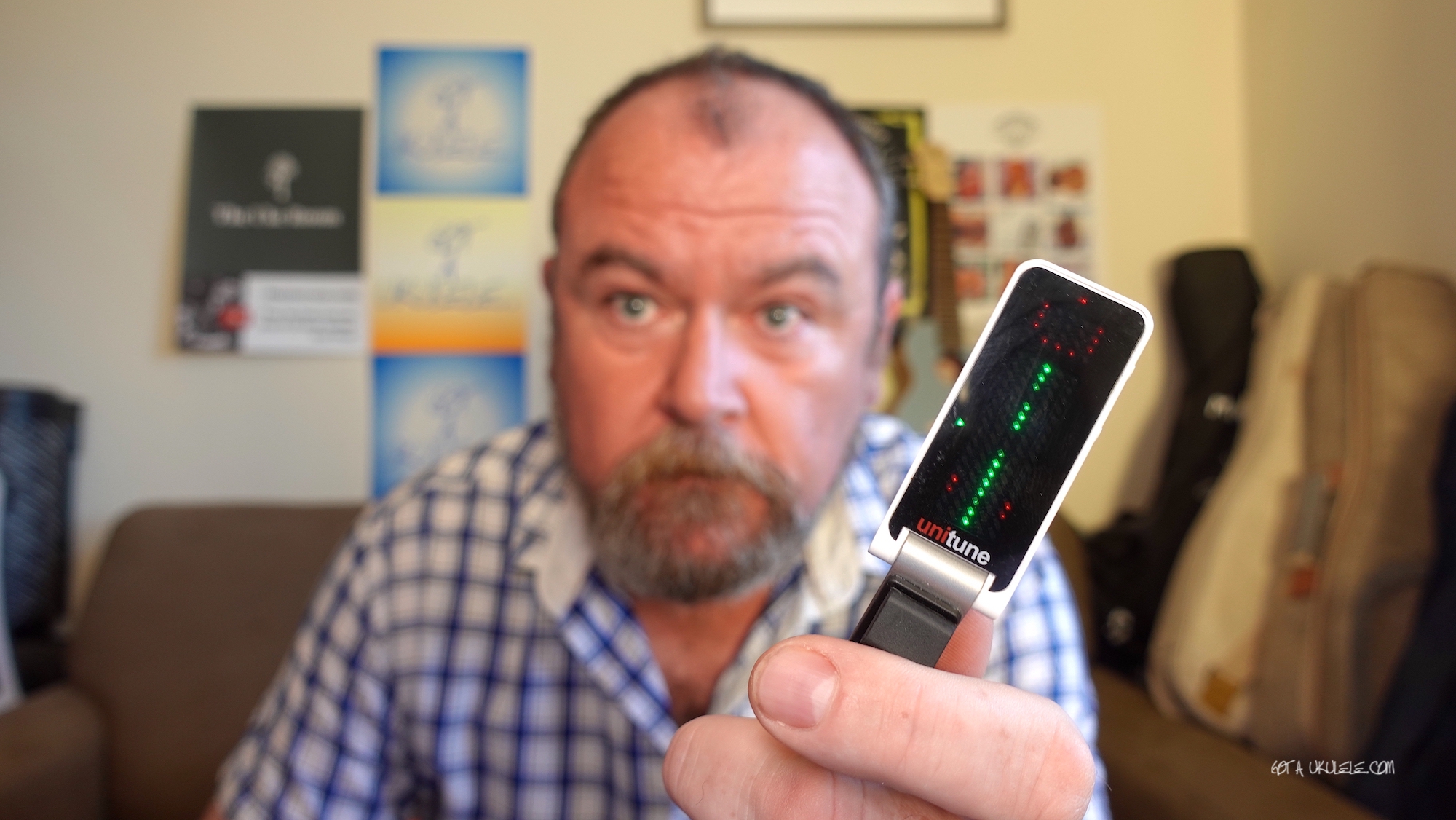
Following on from my review of the Peterson Stroboclip for Ukulele I took a look at the TC Electronic Unitune Clip strobe tuner

TC Electronic Unitune Clip

Read More »

9 Mar 2017

Swapping Ukulele Tuning Pegs

Just a short advice note on swapping ukulele tuning pegs for others and some of the work you may need to do to achieve it

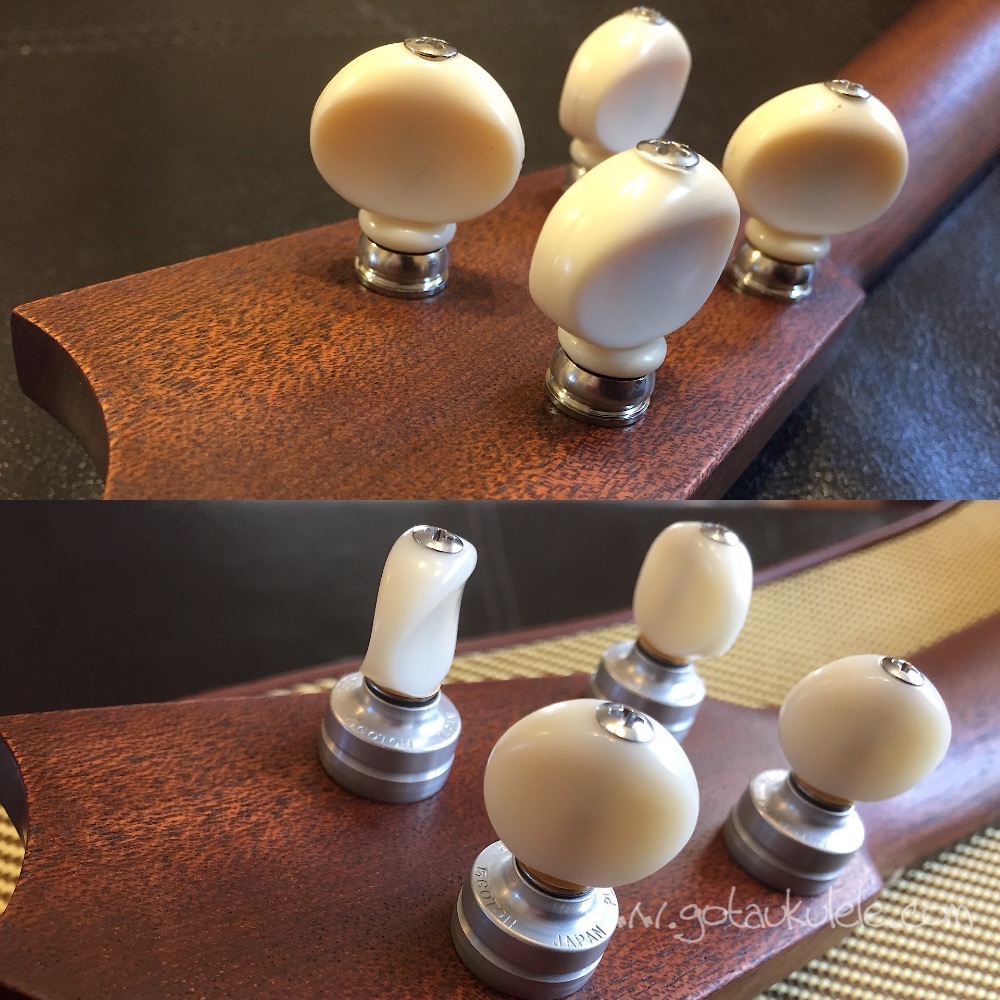
In this first picture you will see a 'before and after' on a Martin Soprano ukulele - previously Grover friction pegs, latterly Gotoh UPT's. A change I wanted to make just for the fun of it.. And really easy to do..

ukulele tuning peg swap
Read More »

10 Sept 2016

D'Addario Ukulele Clip On Tuners - REVIEW

Product review time and not an instrument itself in this feature,

rather a set of gizmos that no ukulele player is really ever without. Today we are looking at a pair of clip-on tuners from D'Addario.
Ahhh, the clip-on tuner... the blessing and curse of the ukulele world. Why a blessing? Well that much is surely obvious - they are cheap and make it much easier (and quicker) to tune than using pitch pipes or a tuning fork and you just kind of leave them there ready to do their thing - a great invention. And why a curse? Well I think that in many cases with the ukulele beginner they rely too much on the tuner. "But my tuner says so, and therefore it must be right". And with that I fear that a new generation of players are losing the ability to actually listen to notes and certainly the ability to tune by ear from another instrument... 

Please don't get me wrong though. I love them, and I use them all the time for the convenience factor, but I would still urge all of my readers to learn to use your own ears as well as using a tuner!

Rant over, and on to this pair. You will surely agree that D'Addario is a trusted name in musical instrument products, so you would expect these to have a certain decent quality level to them. You would not be wrong. The market for clip on tuners is pretty excessive in my opinion and I have seen so many that are flimsy or badly designed. Neither of those complaints apply here.

D'Addario Ukulele Tuners


First up is a tuner I have featured before on Got A Ukulele in the form of the NS Micro Headstock Tuner (the PW-CT. I first starting using the Micro because I had become sick of the overly large clip on tuners I was using before such as the Snark. Sure, they do their job, but not only do I think they look ugly, but I lost count of how many I broke, in many cases as a result of being on stage, turning the ukulele and whacking them on a microphone stand. No, I wanted something smaller and the Micro from D'Addario is now what I have been using for clip on tuning for some time.

D'Addario Micro NS Ukulele Tuner


The form factor is tiny, to such an extent that when performing, most in the audience would not know it is there. And it becomes even more unobtrusive when you hit the 'reverse' button and put the tuner on the other way around so the display is behind the headstock. Brilliant.  

D'Addario Micro Ukulele Tuner in reverse


Not that the diminutive size means it is hard to read though.. the screen is extremely bright and easy to read, and also importantly in operation it registers notes quickly and accurately. Some cheap tuners can fail in this department leading to sights of people on stage endlessly plucking notes trying to get the tuner to even register. This works as you would expect with both a note and needle display showing you whether you are sharp or flat, together with a colour guide (green in tune, red out of tune).

The clip part is not spring loaded like so many others, rather you adjust the size to fit the headstock and push it on.

Together with the ability to flip the screen, the micro also has adjustment buttons allowing you to 'tune the tuner' (meaning adjust the frequency of the A note up and down from the standard 440 Hz). It also has a cool Metronome feature the displays a bouncing light back and forth to the beat setting you choose. Handy for practice.

So I say all that about my dislike for larger clip on tuners, and then out of the package from D'Addario falls their standard Chromatic Headstock Tuner which is clearly much larger than the micro. Would I rekindle my love for the larger tuners? 

D'Addario Chromatic Headstock Tuner


Well actually, yes I really rather like this one too. First of all, you could really not say it was ugly like the Snark. It's  modern looking, sleek and best of all it folds down flat when on the headstock. I like that.

And when you unfold it the tuner immediately springs into life showing off its large and very bright screen that is super easy to read.

Attaching it is simple as it employs the more standard spring loaded clip mechanism, but the whole thing feels solid and it doesn't have the flimsy hinge so often the plague of these things.

Operation wise it's exactly the same as the Micro, just larger - the same note and needle display with colour coding and the same ability to reverse the screen and mount it underneath the headstock. Whilst it also has buttons to tune the tuner, it lacks the metronome feature of the micro, which is a shame as that large screen could have shown that off really clearly.

D'Addario Chromatic Headstock Tuner screen


But that is a minor gripe for a clip on tuner that I really rather like. It's the look of it for me, coupled with the ability to fold it down and that super clear screen that I really rather like.

At the end of the day, if you play ukulele you WILL be buying a clip on tuner. In fact if you are like me, you will go through lots of them. I say, avoid the cheap and nasty. Some of those are hard to actually operate and not that accurate and I've far too many fall apart. I consider D'Addario to be a name you can trust, and these are certainly well constructed with no flimsy hinges. If you think clip on tuners are expensive, I can assure you they are not. I remember the days where tuners were huge bulky things that you had to plug a cable into and cost a fortune. I also remember the first clip on tuners from Intellitouch and they cost close to £100 and this was 20 years ago! No, clip on tuners today are NOT expensive.

Which one do I recommend? That's hard to say - get both! Take a look at the video below to see them in action. Seriously - both will perform well for you.

The Chromatic Headstock Tuner retails for around $27 and the NS Micro for around $21 (though shopping around will get you them much cheaper!)


Read More »

17 Jun 2016

Waverly Ukulele Friction Pegs - REVIEW

Well it's the ukulele myth that just never seems to go away. The 'friction pegs are universally awful' claim seems to be alive and kicking in the ukulele world. And it really gets me down for the simple reason that it's just not true. (What is it with the ukulele world that makes untruths 'stick' so easily??)

Waverly Friction Ukulele tuners
Waverly friction pegs on my Bruko tenor


Regular readers will have seen me rant about this before, and I include an original video of mine on the subject at the foot of this article which shows you what I mean. Put simply, CHEAP friction tuners are indeed awful, but GOOD friction tuners are sublime. They simply dont suffer from the problems people encounter when they are dealing with cheap ones. The trouble is, people assume the problems they face with cheap tuners (slipping and sticking) applies to all friction pegs. It doesn't!

And why exactly do I like friction pegs? Well lots of reasons, but mainly because they dont weigh a headstock on a soprano down like gears do and I think they just look better. They remove the look of 'ears' that geared tuners create. But, I ONLY use friction pegs that work well!

Anyway, back to the point at hand. The Waverly tuners. I'd been looking for some time to try these out. For good quality friction pegs I usually go for Grover 4 style pegs, that move like butter and hold like a rock. However I was looking to change the tuners on my John Daniel Pixie ukulele which has a very small headstock. I kind of thought the Grovers were a little too big for that headstock, and possibly a little heavy as well. I'd actually changed the tuners on the Daniel before and was using fairly standard basic pegs.

John Daniel ukulele tuners
The John Daniel before with cheap friction pegs


Waverly make a whole range of instrument tuners and are kind of the 'Rolls Royce' in the tuner world. They are used by brands like Martin, Collings and Santa Cruz on their high end guitars and for good reason. They represent an acclaimed choice where 'only the best will do'. They are based in Montana, USA.

And I will be frank here. The reason I had shied away from the Waverly tuners was because they are expensive. By that I mean they are around $45 dollars a set (not a huge amount of money, but still expensive) but bear in mind that I am in the UK so international shipping pushes that yet higher. That's about twice the price of the Grovers I normally go with. Still, they seemed a perfect option for a small ukulele on account of how sleek they look. Add to that the fact that I read nothing but great user reviews of them and I thought it was time to bite the bullet.

ukulele friction pegs
Pegs compared: From L-R Grover style 2, Grover style 4, Waverly


The Waverlys arrived. I actually bought a couple of sets, one with black buttons that I retro fitted to a Brüko Tenor ukulele and another set with Koa buttons for the John Daniel.

The friction element of the Waverly tuners is simplicity itself, and genius too. As you will have seen from the video below, the improvement on sticking and slipping with good geared tuners like the Grovers is created through the use of many internal parts (washers, bushings and collars) that hold when tight, but equally move extremely smoothly. The Waverly brand are different though - in fact there are a minimal number of parts - just 5 parts in fact, or 6 if you count the screw.

waverly ukulele friction peg


First we have a collar bushing for the front face of the ukulele. This needs the outer face to have a countersink chamfer, which wasn't really needed on the Daniel as the holes were already quite large, and was also in place on the Brüko. This allows the collar to sit flat against the headstock and not protrude and the collar serves to centre the post. If you dont have a counter sunk hole it's pretty easy to drill one and Waverly even make their own drill bit for the purpose (though most drill counter sink bits will do the job).

John Daniel ukulele headstock

Through that runs the tuning post which is a pretty standard affair. A hole in one end for the string and a hole in the other into which to screw the button.

On the back of the headstock you fit the metal chromed collar (its nickel plated brass), complete with the embossed Waverly name (which I think looks extremely classy) and into that fit a spring. Yes, a spring. These are the first friction pegs that I have seen that use a spring to create the friction effect. You then attach the button and screw it down. The action of screwing the button compresses the spring and that creates the friction. There are no metal on metal, or plastic on plastic faces that are creating the friction - these work though that spring creating the grip between the tuner and the headstock. Bear in mind that Waverly also recommend a chamfer on the back of the ukulele like the one for the collar on the front although I am not totally sure how essential that is.

It works kind of perfectly I found. At first I needed to work out how much tension to apply to stop the pegs slipping but with a few turns of the screwdriver eventually I found the nice balance between them holding and yet still turning for tuning purposes. And that turning is just ultra smooth and accurate. Unlike cheap friction pegs there is no judder, they simply turn when you want them to and then hold. Perfect!

When completely fitted I think they look the part too - and certainly for soprano ukuleles or smaller they will really look classy and remove the neck heavy 'ears' look of geared tuners. Saying that - I also fitted them to a tenor and they look great too!  If I had one complaint its that the adjustment screw uses a flat head screwdriver rather than a posi-drive / cross head. It's a minor complaint, but I just find it easier to quickly apply a cross head screwdriver than I do a flat head. Other than that though - I am absolutely delighted.

waverly pegs on John Daniel ukulele
The John Daniel after!


Now - in both of my cases, the Waverly tuners slipped right in to the holes that were already there. I can't, however, say that will the case for every instrument. According to Waverly these will retrofit directly into holes between 5.56mm and 6.35mm so that should allow you to check. Don't panic though - widening a peg hole is not as scary as you might think - I've done it to several instruments. Simply use a drill with the correct sized bit, cover the back and front of the headstock with masking tape and GO CAREFULLY and slowly - remember you are not drilling a new hole, rather enlarging one very slightly. In terms of headstock thickness, Waverly say that these will work on headstocks anywhere between 7.94mm and 14.29mm.

So yet another example of a tuner that completely disproves the myth that all friction tuners are bad. Whether you choose good quality Grovers or these Waverlys, I recommend them both. Both will show you the world of difference between cheap pegs and good quality pegs. I fully understand why the cheapest ukuleles dont fit these - it just couldn't be done for the price, but then tuners are only one of the things that are wrong with cheap ukuleles...  You get what you pay for! And to be honest with you, I would happily see these on all instruments!

(and if you want to know where I got these - StewMac)

And here is that original rant about the untruths surrounding friction tuners.


And be sure to read my other ukulele and ukulele product reviews here!

Read More »

26 Jan 2015

A Look Again at Ukulele Tuner Devices

Things move on in the ukulele world, and as much as people moved on from using tuning forks and pitch pipes to clip on tuners, that world moves on too. I thought it was therefore high time I took another look at ukulele tuning devices and let you know some of the kit I am now using. A combo review if you will.

But before we kick off, I did not intend that to sound like a slur on the use of a tuning fork. I ALWAYS carry one in my gig bag and know how to tune the uke to itself. In fact I would say they are a must have piece of kit for the money. Frankly you never know when batteries will die and a tuning fork will never fail to get you out of a fix. They just work! Buy one, you really should!

But moving on, we do like our gadgets too (well this player does) and the clip on tuner is a marvel that moves us massively further forward from the days of spending £50 plus on bulky guitar tuners with analogue needles on them. They are now much cheaper and, on the whole, very reliable.

I have reviewed a few, from the old favourite of The Snark to the higher end likes of the Peterson Strobe model. I used to regularly just tell people 'get a Snark' for the simple reason that I found their readout clearer and more accurate than any other (plus they were cheap). They are also kind of funky looking and I must admit I liked that too.

But they have fallen out of favour with me now. In fact I don't think I now own one that is still in one piece and I used to have half a dozen of the things. And that is the point - they break very easily, particularly on the hinge that holds the unit to the clip. I could add that they also have a tendency to buzz and rattle before they break which is almost as annoying, but generally, they just don't seem to stand up to regular use. It comes, I think, from them being bulky and sticking out from the headstock so much - an accident waiting to happen? On a stage environment I lost count of the amount of times they were ripped from the headstock by a strap, another player or a microphone stand. As such I wanted something smaller. I'm not just knocking Snarks alone here - most of the clip on tuners out there I find are overly bulky and suffer because of it.

I list below examples of what I am using now. I suspect things may change as time marches on, but for now I can't find a better mix for me.


D'Addario / Planet Waves PW-CT-12-NS Clip On Tuner (approx £12.00)

It was actually a couple of years ago I came across the D'Addario brand micro tuner and they are quite old now, but they have become my staple clip on tuner. (Thanks go to Paul Redfern of uke band The pUKEs who lent me one!)  I find them just as accurate as I need them to be (and as any other clip on), but the real boon is how small they are. They are so inconspicuous it would be next to impossible to hit them on anything and they can just be left on at all times minding their own business.

D'Addario Planet Waves Clip On Tuner


As an  added bonus they remove that rather awful look of warts hanging on the end of the uke on stage. Come on, I can't be the only one who thinks that a uke on stage with a hideous looking tuner hanging off it looks - well, bad? You will hardly notice the D'Addario model I can assure you and most of my main ukes now have them as a matter of course.

Like most clip on tuners, they can be adjusted to re-tune them (not something I recommend and have come across players unsure why their tuner is off because they changed the base tuning) but I suppose that is useful to get a uke in tune with something hard to tune, like an old piano. Otherwise the screen is nice and clear to read and it has a cool feature that flips it upside down if you want to go totally stealth and mount it on the underside of the headstock. It's chromatic too so none of this 'tuned for ukulele nonsense' as it will read any note. (Tuners that bill themselves that way make no sense to me - just get one that reads all notes-  you never know when you may try another tuning or even another instrument.)

As a final point, the words 'clip on' don't really apply here as the D'Addario doesnt employ a normal clip - rather it has an adjustable jaw held by  a notched clip that slides on to the headstock and tightens with a squeeze of finger and thumb. The important thing here is that it doesn't come off, even with shaking. In my experience, even the hardiest of the larger clip on tuners won't stand up to that.

The little D'Addario is a joy and does all I want from a clip on in a tough little box and I highly recommend it.

D'Addario Planet Waves Clip On Tuner tiny
Tiny!

But that said, I only really use them for around the house and when performing as a backup. Because I tend to play amplified if on stage I am automatically using guitar leads ahead of an amp system and that leads me to what is, without doubt, my favourite electronic tuner method.


Boss TU-3 Pedal Tuner (approx £55)

I use a Boss TU-3 Chromatic tuner in a Foot pedal, and plug this first in the chain between my uke and whatever I am using it to amplify it. The TU-3 is their latest incarnation of a tuner pedal that just works impeccably. It has all the features you can shake a stick at, but in use with a uke on stage has the following important features for me:

Boss TU-3 Pedal Tuner


1. It is bright and clear even when on the floor
2. It cuts the sound of the uke when tuning - meaning it removes that, frankly, unprofessional thing that some uke performers do in tuning up on stage during a show (come on - who wants to hear it? Yes, I know Joni Mitchell did it, but, well, you are not Joni Mitchell. It sounds and looks BAD!)
3. It is well made and adds no noise to the signal - Sure, there are cheaper Boss copies about , but in the world of Boss pedals my motto remains to 'buy the best' if you want to avoid superfluous noise in your signal. This is built like a tank.
4. Its Chromatic - meaning, as per the D'addario, it can register any tuning you like, any note - and will work with a variety of instruments (pretty much anything that you can give it a line signal from).
5. It picks up even the lightest signal with precision. Has never let me down on that front..

In short, if you perform on stage I just think its one of those pedals that you shouldnt be without - thousands of professional guitar performers cannot be wrong! Sure its not small and it is not the lightest tuner in the world, but it is no different from any other pedal. If you are carrying stage gear therefore this really doesn't add too much to your burden

But outside those, perhaps we don't actually need a physical device at all? Surely there's an app for that?

iPhone Apps (From, FREE!)

Well yes there are, lots of them, some free, some expensive and some like this one I've just been playing with developed by Uke4U. It's only 79 pence (or one dollar) and works just fine on the iPhone or iPad. I like particularly that it has a range of preset tunings for most scales of ukulele in both high and low G, but also other uke tunings like ADF#B (to keep the banjolele nuts happy one assumes!).


Uke4U Tuner App for iPhone


There are plenty of others and they kind of fit into the category of 'why wouldn't you' if you run a Smartphone capable of downloading apps. I have a few I've tried and I must admit when I sit with uke in hand and can't find the tuner I left clipped upstairs I do reach for my phone now.  That doesn't make them a stage ready substitute, but equally they have their place. As most people tend to always have their phones or tablets to hand, then, 'why not' indeed?

So the same view I always had applies I guess. I still love clip on tuners, but I have become more picky about what I use. Either way, if you play uke I could do nothing but encourage you to invest in one. If you are on stage I don't think you can beat a pedal tuner if you are plugging in regularly though and they will last a lifetime.  With any of them, you get what you pay for in terms of how long they will last, but they all tend to work the same way. Oh, and get a tuning fork! As one very well known uke professional said to me (Mr Phil Doleman!) - it's the only tuner capable of working as a fork for an after show Chinese meal too!

Read More »

20 Mar 2014

A Look Inside Ukulele Friction Tuners - Not All Bad!

A common thing I read on ukulele social media is how beginners seem to hate friction tuning pegs on ukes. I decided to look into them a little more closely. Guess what... you get what you pay for.


Personally, on smaller traditional looking instruments, particularly sopranos, I don't think you can beat the look of friction pegs. Geared tuners on small instruments can make the neck top heavy and just, kind of, stick out! But it is a worry that friction tuning pegs have gained a reputation to being difficult to use, sticky or just plain useless. This is not true across the board.

Sadly, like many things with the uke today, cheap parts flood the market and it is therefore no wonder that pegs form part of that. The friction pegs on the recent uke that I took to pieces, are some of the worst I have seen and are a nightmare to use for a beginner (I just about got them working). The vast majority of other cheaper ukes that use friction pegs (including some higher cost ones) will use pretty basic friction tuners too. I am used to them, and I can tune with them, but have been working with them for years. A beginner though will find they stick, shoot to over tuning and that they are generally hard to be precise with. A shame, but very common.

However, if you spend only a little extra money, you can find some really nice pegs with a number of parts that honestly will change your perception of friction pegs. The pegs on my Koaloha Soprano are sublime. They look pretty much the same as other friction pegs, but only when using them will you see what I mean. They hold, but turn as smooth as geared pegs, without slipping. Not all friction pegs are alike!

So whilst it may not be cost effective to add £25's worth of better pegs to a £20 ukulele, if you are playing a £100 uke and dissatisfied with the friction pegs, or fancy removing geared tuners to move to a more traditional look, retro fitting them is easy and you can get good quality.

Anyway, I put together this video to show you how they compare, and what goes in to making a higher end peg.

Enjoy!


( DIRECT LINK )

Read More »

10 May 2012

aNueNue tuner APP - REVIEW

Had to share this with you - we all love a ukulele bargain. Uke maker aNueNue have released a new tuner app for the iPhone (and iPod Touch and iPad) - and best of all, it's FREE!


anuenue tuner app screenshot

It's a really simple affair with only two main settings. In the "All Notes" setting, you get a chromatic tuner that works with any note, and in the middle setting, "Ukulele C" you get a tuning that recognises standard GCEA tuning, and when you pluck recognises the string number as well as the note. To be honest, I am not sure whether this is really needed, and if they felt it was needed, why not put a D tuning option in?  The third option is basically just a link to the aNueNue site.

Anyway - the app works by using the device microphone to listen to your instrument (nb - older iPod Touch users will need to use a microphone from the earpiece to work it). You pluck the string, the needle registers the note on a bright rainbow dial. When in tune the green light comes on, when its not, it's one of the red lights either side.

anuenue tuner app

It claims it is accurate to plus or minus 1% (which I think is unlikely) but it does work, and works well. It picks up my plucking quickly, and most of all it's free so why not download it?

(Note - this is one of those apps designed mainly for iPhone - whilst it works on iPad it runs in that smaller window that iPhone apps use - still perfectly useable though.)

You can get it from the App store here - aNueNue tuner app
Read More »

17 Apr 2012

COMPETITION - Win a Snark Tuner

COMPETITION NOW CLOSED! 

You may have seen my recent review of the Peterson Strobe tuner, and agree that its a bit pricey for most tastes. For me though, the best value and best featured ukulele clip on tuner is the Snark tuner by QWIK. And because I like that tuner quite so much, I am giving one lucky reader of Got A Ukulele a chance to win one!


snark ukulele tuner

I am giving away a brand new Red Snark (the one with the option of using it as a clip on or with the in built microphone) which as you will see in many reviews, is a highly regarded tuner. This is a free to enter prize draw.

Now this is going to be a Twitter competition. Don't worry if you have never used twitter - it's free and quick to sign up an account here.

To enter, all you have to do is the following two things

1. Follow my Twitter account - you can find me HERE or at @bazmaz_ukulele . (And don't worry, you don't have to stay following me for ever if you really don't want to, only as long as the competition runs, as I will be notifying the winner via Twitter, and will need to Private Message them to get address details.)

2. Tweet the following text exactly as you find it below. Don't add any other text.


I want to win a SNARK  tuner with Got A Ukulele  RT and follow  to enter!


And that's it. If you come across the tweet on Twitter, simply ReTweet it and make sure you are following me to enter that way too. Tweets must be made by midnight (GMT) on 5 May 2012 to qualify. After that date, I will draw a random winner and let them know they have won. Then you just need to wait for your Snark to arrive

Good luck - and feel free to share and tell your friends too!


RULES (IMPORTANT)!

1. Competition  ends at midnight GMT on 5 May 2012
2. To be eligible for the prize draw, you must tweet the above statement and be following my Twitter account @bazmaz_ukulele 
3. On draw day, I will pick a random winner of those eligible entries and inform them via a message on Twitter. Only  those following my Twitter account will be able to receive the Direct Message. The message will ask for your email address in order for me to correspond with you to obtain your mailing address
5. In the event that the winner fails to respond to the request, after seven days a second draw will take place
6. This prize has no alternative cash value.
7. No purchase necessary
8.  Tweeting your entry is no guarantee that the Tweet was received. No responsibility can be accepted for entries that are lost or delayed, or which are not received for any reason
9. The prize in not transferable to another person
Read More »

16 Apr 2012

Peterson Stroboclip - REVIEW

New gear time in Got A Ukulele towers, and here is my review of the Peterson Stroboclip tuner.


peterson stroboclip

As I say regularly, a clip on tuner is really a must have for a ukulele player these days. I know a lot of purists will say that players should learn to tune by ear, and I would agree that is a good skill to develop, but clip ons now are cheap small and so convenient, then why not. I've reviewed some other tuners on Got A Ukulele before, but have wanted a Peterson strobe tuner for some time now, and bit the bullet.

So what IS a strobe tuner? Well, it's basically a clip on tuner that works in the same way as any other, but the way it provides you with a visual representation of when the string is in tune is displayed differently to any other tuner. Most tuners use either red and green lights, or perhaps an LCD needle, such as on the Snark. Simple really, when the needle points at 12 o clock and turns green, the string is in tune. The thing is with those tuners though, is that the accuracy is limited by the way the reading is displayed. As such, most clip on tuners are only accurate to about 1-2 percentage points. A strobe tuner uses a different way of displaying the readout which means it is proven to be accurate to about 1/10th of one percent of accuracy - quite a leap.

In short, it works on an old analogue technology that you may have seen used around the edge of a record player platter - the little black boxes. Using strobe theory, by spinning that strobe pattern, when the record player is spinning at exactly 33rpm (or 45rpm) the boxes stop being a moving blur and appear to stand still. The Stroboclip uses the same visual pattern on it's display screen. Basically, when a string is plucked slightly flat, the black boxes move to the left of the screen, and when sharp, they scroll right. When the string is 'dead on' the boxes don't move at all. No needle or LCD readout can provide that level of accuracy.  That accuracy comes at a price however. Whilst I said above that clip on tuners are cheap enough for anyone to buy one - the Peterson comes in at an eye watering £60.  Yes, SIXTY.

peterson stroboclip display


The Peterson arrives in a plush (but overkill) metal tin box. I say overkill as surely it will end up in the ukulele case on it's own. The design is nice, and the body of the tuner is finished in full metal. Why oh why then, did they choose to attach such a nice looking and feeling tuner body to a cheap plastic clip. The clips on the Snark and other tuners are as good as this, if not better. This is an expensive tuner, but the clip feels loose and cheap to me. Sure it clips on fine, and it's easy to adjust the display to a variety of positions, but I think the clip is a letdown.

The screen is large, and backlit, using LCD black on grey. I must say, that whilst the strobe boxes are extremely clear to see, the same cannot be said for the other display elements, such as the mode you are in. The Snark is certainly easier to see in poor light. Still it's functional.  Along the top of the tuner are three buttons - basically a central mode button, and a plus and minus button either side for changing settings in the menus - and there are a LOT of settings. Power is switched on by a tiny, fiddly on off switch, which could be much improved. As well as the usual offerings on some tuners, such as the ability to re-tune the device to another source (such as a piano), the Stroboclip comes with a massive  list of preset instruments (28 in fact) for it to work with. It's a chromatic tuner, so picks up the notes it hears, but setting it up for a particular instrument gets it bang on the money quickly.  Want to tune your Oud or Sitar? Those are in here. Other settings include a drop capo setting for tuning with a capo, but the clever stuff comes in the next two settings.

peterson stroboclip buttons


Firstly, there is a Sustain setting. If you have ever had an issue with a clip on tuner of the note decaying before the tuner can work it out, you will find this a real boon. With Sustain mode on, it holds on to the note plucked, and continues to give you a display of the note long after it has stopped ringing. This is of less importance tuning a guitar or violin, but on a uke or uke banjo, the sustain of the instrument is naturally shorter. I found this setting to be excellent.

The next setting is something that I think is dividing opinions - the 'sweetened tunings'. Peterson have recognised that tuning an instrument is not a 100% exact science. Sure you know your soprano uke is tuned to GCEA, but actually, the real mathematics of tuning mean that by adjusting these tunings (and I am talking tiny fractions of percentages), you can provide a warmer more harmonic sound. For each of the instrument settings on the tuner, there is the ability to switch on the 'Sweetened version'.  More on my opinion on that below.

So how is the tuner to use? Well aside from that fiddly on off button and cheap feeling clip, I tuned my Kanile'a Tenor with my Snark as accurate as I could get it. On with the Stroboclip. One string was bang on, but all of the others needed some adjustment until the display had each string dead on. I then put the Snark back on and it was still reading exactly in tune. That in itself showed that there was more tuning to be done beyond the Snark.  I repeated the process with my Koaloha Soprano - that was more of a fiddly job because it employs friction tuners - with this level of accuracy, you need to make only microscopic changes, and this took a bit more effort, but again, the Peterson tuned the instrument more finely.  But did it make a difference in sound. I would say yes, on both of those instruments, when bang in tune, they seemed to ring and sing more than before. Was that just an aural illusion? Time will tell and your mileage will vary!  Certainly when using the tuner on a cheaper instrument I found very little difference, so I would suggest that this is a tuner for a more professional instrument.

And what about those sweetened settings? Will this jury is still out, and I suspect it may stay that way. I liked the sweetened tuning on my Kanile'a but actually disliked it on the Koaloha - work that out!  I would say however, that I used it on my Taylor 6 string guitar in sweetened mode and it sounded absolutely lovely so perhaps there is something in this. Another observation I have yet to put into practice, is how a sweetened tuned uke will sound playing with others tuned regularly - will it make mine sound out of tune?

peterson stroboclip on ukulele


So there you have it - does it work? Yes, very well, but with some design issues. It's not a tuner for every player, not least because of the price, but also because I think it would be total overkill on anything but a higher end instrument (and at the end of the day, this is a higher end tuner).  The clip, the buttons and the display are all a bit of a let down - they work, but could be improved in my opinion.  And finally though - does anyone need that supreme accuracy? Well, that depends on your outlook. Certainly before recording something special, you might want to give this a whirl, and I can see this being extremely helpful for checking intonation to a high degree of accuracy all over the neck.  I'd say, if you want to splash the cash, give it a whirl - it certainly works.

Links below to get one - bear in mind that since doing this review, Peterson changed the styling to a sleeker black model - does the same thing though!


VIDEO TEST


PROS

Supremely accurate
Nice casing to the tuner
Sweetened tunings may appeal to some
Sustain feature is outstanding

CONS

Price
Cheap clip mounting
Fiddly buttons
Display could be improved


Read More »

17 Mar 2012

Don't be afraid of friction tuners

One comment that I hear a lot from ukulele players, and not just beginners, is that they have a dislike for friction tuning pegs.


I think that is quite a sweeping statement, and personally I actually prefer tuning pegs - I think they are more traditional and just look better. I say "sweeping statement" because like a lot of things in the world of musical instruments, there is good and there is bad.

This blog post is prompted by the fact I changed the friction tuners on my new Canarian Timple from the 'bad' to the 'good', and you can see the result below.

timple headstock tuners

The way a ukulele friction tuner works is that the screw running through the peg tightens the peg itself against the metal collars on either side of the headstock until they grip. With a poor quality friction tuning peg you will find that the action is 'sticky' or jerky and you find yourself moving above and below the correct pitch quite easily. Slacken the screw and the tuners don't hold, tighten too much and you get the jerkiness. Extremely frustrating. The original tuners on my Timple were not absolute howlers (I have seen much much worse) but they were sticky enough to irritate me and I am quite particular about friction pegs.

So, what makes for a better peg? Well, simply, better construction, meaning more parts including washers that assist in making the action smooth whilst still holding tune as a result of the bite the friction brings.  Check out the pictures below to understand that better.

In this first picture I show all of the parts of the original friction peg on my Timple. As you will see there are five parts, and the friction is achieved by nothing more than the plastic of the peg biting into the metal collar on the back of the headstock.

cheap ukulele friction tuner parts

The  next picture shows all the parts of the replacement ukulele friction peg, which as you can see is made up of 9 parts including various washers and sleeves. The result is a really smooth action that still holds tune.

quality ukulele friction tuner parts

Now these replacements are not top of the line either (and amount to about £3 each) though one can spend an awful lot more on adjustable friction tuners. For me those, this model just work fine and have made a huge improvement to the instrument.

So, therefore, don't write off a ukulele if you see it has friction tuners.  If you are struggling with friction pegs on an instrument you have, consider replacing them, it really isn't all that hard.  A good quality friction peg is a dream to use!


Read More »

12 Aug 2011

Kala KC02 Ukulele Tuner - REVIEW

Realised that I had never given my readers my review of the Kala KC02 clip on ukulele tuner, so here we go!


kala ukulele tuner

The KC02 is a very simple tuner that works in the same way as the dozens of these that exist. I'll be honest, when I was in need of a new tuner as my previous Cherub broke, I probably did pick this because it was branded Kala.  That said, obviously Kala dont physically make these, they just badge them and its merely a generic Chinese model.

It has the usual clip with padding protection to clip on the headstock and a clear LCD crystal display.  There are no other switches on the tuner other than a large on off button at the base.  This (obviously) switches the tuner on, but tapping it again cycles through the functions it offers, namely C tuning, D tuning and Chromatic (which basically can be used to tune anything).  It is made of plastic with a slight rubberised coating to it with the Kala logo in red screen print.

Like many other tuners, when clipped on you pluck a string and an LCD needle moves to register the note, and when central (pointing at 12 o clock)   turns green to signify the string is in tune.  It also shows the note that you are tuning in the top corner.  Sadly, unlike other models that use a variety of colours, this moves only between a pale blue that is used to signify a string that is either sharp or flat, and green for "in tune".  The display is clear enough, but it is small and because of that the needle cannot show an accurate number of positions for each note.

And that really is it. Its a simple tuner, and I suppose it works ok.  The gripes I have though are that this tuner is still selling for a price (circa £13 - £15) for which you can get superior tuners that offer much more.

Lets look at what is missing

- no multicolour display
- no ability to "tune" the tuner to another frequency or instrument
- no microphone option meaning it only works clipped on.  (Some tuners have a feature where you can set it on a table and tune the ukulele acoustically via a microphone)

Above all else though, I don't actually find that this tuner is particularly accurate.  When the notes are "on", sure the uke is fairly well in tune, but there seems to be quite a lot of "give" or "play" in what it considers to be in tune.  I suppose it is probably a feature of the small and fairly simple display that doesn't allow it to show a needle that is very accurate, but you should bear that in mind.

To add to that, I also don't find it particularly sensitive either and you need to really pluck the strings quite hard to register them.  This is not only bad practice as tuning a stringed instrument works better when you pluck a note cleanly, but it also tends to confuse the tuner and have it throw up some odd notes nothing like the one you plucked.

Oh, and the battery cover is rubbish and has worked loose meaning most times I take it from my case, the cover has fallen off and the battery fallen out....


For my money though, I would shop around and look for more features for the same money.  My top recommendation for a tuner that still amazes me at how sensitive it is, look no further than the Snark range of tuners. They are hard to beat in my opinion.

As for the Kala - 5/10
Read More »

31 Jan 2011

New ukulele tuner on its way - the Snark

My Kala clip on tuner has been beaten and bruised too much, and now the hinge broke.

No matter, these things are cheap as chips (and an essential purchase for new players - not got one yet?  Go and find one!)

Anyway, I needed a new one and bought this - the Snark

snark tuner got a ukulele

So why that particular tuner?  Well, unless you are getting into spending £50 plus (which I dont think is worth it) most clip tuners are all about the same price (in the £10 - £15 range) and essentially all do the same thing very well.  I bought this one because it looks funky, and I like the name.  Also heard good things about the screen too.  This one works on both vibration or can be switched to use an inbuilt microphone.  The blue version only works on vibrations.

I will, in due course, be doing a proper article on tuners for my beginners guides, so keep a look out.
Read More »

2 Jan 2011

iPhone app review - tun-d Free

As I have previously reported there are an increasing number of ukulele apps for the iPhone and iPod Touch available on the app store, and thankfully many of them are free.


In this blog post I give you my short review of the tun-d app, which is a simple but stylish stringed instrument tuner.

It works on iPhone and iPod touch (and presumably, the iPad) though subject to reservations (see below).  Its also free.

Its a super simple app that uses the iPhone speaker to listen to the individual strings and it gives a tuning representation on the screen

Standard tuner display set up for standard guitar

 A pluck of the string gives a representation on the grey bars above where the tuning is red on the far left shows a very flat string, and red far right a very sharp string.  As you tune and get closer the representation gets closer to the middle segment and eventually turns yellow, and then green when bang on tune.  Simple.

The app is clearly made for a whole range of stringed instruments, not just ukulele, and hitting the little gearbox symbol top right  gives you a large set of choices for what you want to tune, including open chords on guitar (in a variety of flavours), modals, chromatics, plus tunings for Dobro, Ukulele, Banjo, Mandolin, Cello, Violin and Viola.


My complaint here is that it only provides for GCEA tuning on the ukulele, and presume there is a similar lack of alternate tunings for other non guitar instruments.  There is a non-free Tun-D which costs £2.39, but that says nothing about whether it allows alternate tunings for uke, so no idea why you would pay for it!

Accuracy with the iPhone is however good, with a wide range on the tuning scale  to play with.  I compared a tuning to an expensive Korg tuner I sometimes use and it was pretty much spot on.


Accuracy with the iPod Touch however was less good - down to the fact that you need to use the microphone in the headphones to pick up the sound.  This is not only clumsy, but I found I really had to pluck hard to even get a response.  The lack of microphone on my ipod (v3) is not the apps fault, and of course the new touch has a microphone, but the lack of sensitivity is the apps fault, and makes it tough to use.

In summary - these things are free, and they do what they say on the tin.  Its hard to knock them for that reason.  

Personally, I would always carry an actual tuner, but in the case of loss or battery failure, these are a good backup I suppose.  This is however clearly aimed more squarely at guitar, so I would avoid if you want an alternate tuning on ukulele than standard GCEA.  Thats not to say ukulele apps are no good - I still regularly use my Ukuchords app which I reviewed on this site HERE, (its brilliant) but for tuners, they are really only a backup.  Hey ho, its free...

The iPhone version works well, but lack of tunings gives it a 7/10 for me.  I remain concerned with the microphone sensitivity on the iPod Touch so its a 5/10.

Besides, there are a ton of free tuners on the app store, so work your way through them!

The app is available for download HERE


Read More »

19 Apr 2010

Ukulele beginners tips - All things pegs

Pretty important things pegs, tuning pegs that is, they hold what is probably the most important end of the string.


If you are starting out with ukes you may get confused on the two most common types of tuners and which is best. Just thought I'd post my thoughts

The two types of tuner you are likely to see are friction tuners, and geared tuners. Friction tuners, as their name suggests are tightened, and the friction of their contact into the housing keeps them still. Geared tuners are like those on a guitar, and the peg is a gear which turns another gear connected to the tuning post.

Frictions certainly look the part and have an old fashioned look that I think suits the uke. They do take getting used to though as the lack of gearing means the turns move the posts directly and in large movements! ( unless we are talking planetary tuners , but let's not complicate things....)

Geared are 'generally' trouble free but unless nicely styled can look out of place on a small uke or are too heavy ( beware cheap ukes using guitar tuners - too big, too heavy, makes uke look like mickey mouse!)

You will read in forums that some people can't abide one or the other. I have a different view. I think both types are great so long as you consider the cost. In my experience, very cheap ukes with friction pegs, tend to have pegs that are nothing but trouble. Geared tuners on a cheap uke way well work better ( but beware , there are bad geared tuners too!)

But if you buy a good beginner instrument, like a makala, or lanikai, you should be ok whatever they are. But do try both! My collection has some of each!

Oh, and even the best frictions can slip- just tighten them till they bite with a screwdriver!
Read More »

Say thanks to Got A Ukulele

Please Help Keep This Site Going!

If you enjoy this blog, 'thank you donations' for the free content are welcomed. Aside from the Google ads, I don't get paid to write this blog and for reasons of impartiality a not sponsored by brands or stores.